9 Powerful Questions to Know If Your Life Has Structure (Or Not)
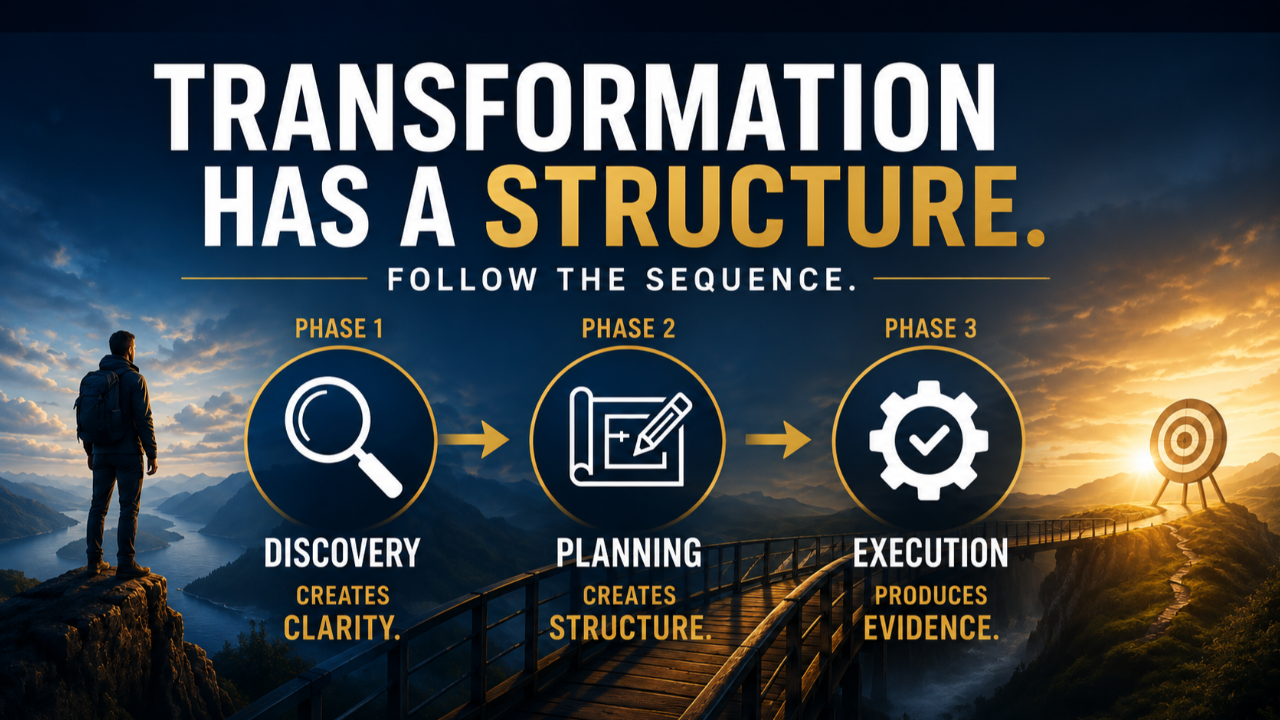
Jun 02, 2026Most people don’t lack discipline. They lack structure. Structure is the deliberate framework of habits, routines, and systems you set up and install to guide your time and energy. It turns your goals into repeatable actions, giving you clarity and focus while reducing the mental fatigue of daily operational decisions. The 9 questions in this article will help you recognize whether your life is organized for consistent progress or simply driven by reaction.
Most people don’t realize they have a structure problem. They assume they need more discipline, more clarity, or more motivation. The real issue is simpler and more foundational: They lack structure in the most important areas, and without it, even highly capable individuals drift. They stay busy and never build momentum. They put in effort but never create stability.
They’re trying to make progress without a structured system to support it.
Here's A Simple Way to Evaluate Yourself
Instead of guessing, you can assess it directly. The following 9 questions will help you determine whether your life is guided and supported by structure or reaction. No tricks. No gimmicks and nothing to pretend. Just an honest evaluation.
9 Powerful Questions
1. Do you have a clearly defined direction?
- Not vague ideas. Not broad intentions. Do you know—specifically—what you are working toward?
2. Do your daily actions connect to that direction?
- Is there a visible link between what you do each day and where you say you want to go? Or are those two things disconnected?
3. Do you follow a consistent weekly rhythm?
- Do your weeks have structure? Or does each week feel improvised?
4. Do you have defined execution standards?
- Do you know what “done” looks like? Or do you rely on how you feel in the moment?
5. Do you make decisions ahead of time?
- Or are you constantly deciding in real time? The more you decide in the moment, the less you execute.
6. Do you track your progress consistently?
- What gets measured improves. What is not tracked is usually assumed.
7. Do you have a system for correcting mistakes?
- When something goes wrong, do you adjust your structure? Or do you rely on willpower to “do better next time”?
8. Do you operate based on your standards or moods/motivations?
- Are your actions driven by pre-set expectations? Or by how you feel on a given day?
9. Can someone else clearly understand and follow your process?
- If someone observed your life for a week, would they see a system? Or would they see randomness?
How to Interpret Your Answers
If you answered “no” to several of these questions, you don’t have a motivation problem. You have a structure gap. That gap creates your inconsistencies and frustrations and slows or stalls your progress, because without structure, effort doesn't compound.
Here What It Means
Most people are not stuck because they lack ability. They’re stuck because they lack organization. They are trying to think clearly without a framework, act consistently without a system, and improve without structure. That approach almost always leads to inconsistency. If you’ve already begun to see the difference between motivation and structure, then you are starting to understand the real issue. And if you still believe better goals will solve the problem by themselves, it helps to understand the difference between goals and structure as well.
Here's What to Do Next
You don’t need to overhaul your entire life in one night. You need to begin installing structure intentionally.
Start Here:
- Clarify your direction
- Define your execution standards
- Create a repeatable weekly rhythm
Then build from there.
For many people, this is where a real planning framework becomes necessary. That is why How to Build a Life Plan Using the 5-Level Powerhouse Planning Process™ matters. And if you are still operating without a clear framework for growth, revisit What Is a Personal Development System?.
Here's The Reframe
You’re not behind. You’re juat unstructured. Once you establish some structure, your progress will accelerate. That’s the real shift. You don’t need more pressure. You don’t need more inspiration. And you don’t need more occasional stints of random effort. You need Structure.
Start Building Structure
Leaders and entrepreneurs who want to close the gap between their intentions and their execution often start by installing a structured execution and planning system. The Powerhouse Planning Workbook™ helps emerging founders, entrepreneurs, and leaders move from scattered effort to organized and measurable action. Once your structure is in place, your momentum follows.