What Is a Personal Development System? (And Why Most People Need One)
Apr 21, 2026Most people don’t fail because they lack effort. They fail because they lack structure. Structure is the deliberate framework of habits, values, standards, routines, and systems you set up and install to guide your time and energy. It turns your goals into repeatable actions, giving you clarity and focus while reducing the mental fatigue of making simple decisions that delay and disrupt your personal growth and development. So, let’s discuss what a personal development system is and why it matters.
Here’s the problem: Most people are trying to improve their lives without a personal development system. They read books. They attend seminars. They listen to podcasts. They set goals. They collect ideas, insights, and advice. And yet, very little actually changes. Not because they lack desire. Not because they lack intelligence. Not even because they lack effort. They lack structure. And without structure, your improvement becomes inconsistent. And your inconsistencies never compound into meaningful results. That’s one reason so many capable men and women stay stuck in the never-ending cycles of starting, stopping, resetting, and beginning again. They’re not always failing because they are unwilling.
Often, they are failing because they are trying to grow without an organizing framework.
Here's What's Actually Happening
Most people approach personal development as information collection. They gather ideas. They try different strategies. They follow what feels useful in the moment. But there is no organizing system behind their actions.No sequence. No framework. No architecture connecting who they are to what they do. So even when they make progress, it rarely lasts.
They reset. They restart. They repeat the cycle.
This is not just a motivation problem. It is a systems problem. That’s why so many people can consume years of self-improvement content and still remain structurally unchanged. They know more, but they’re not organized differently. And if your life isn't organized differently, your results usually aren't either. You can’t grow without a personal development system.
So What's a Personal Development System?
A personal development system is a structured method for consistently improving how you think, decide, and execute. It’s not a collection of tips. It’s not a list of goals. It’s not a temporary burst of effort. And it’s not another motivational push. A real system brings order to personal growth. It turns scattered intention into structured action. It connects clarity to execution through a repeatable process.
A system does three things:
- It creates clarity. It helps you define what you actually want, why it matters, and what direction your life should move in.
- It establishes structure. It organizes your thinking, decisions, and actions into a process you can follow repeatedly.
- It produces execution. It ensures what you know translates into what you consistently do.
Without these three elements, progress becomes accidental. With them, progress becomes more predictable. That is why so many people first need to understand why most people never change their lives before they can fully appreciate what a real system is for.
Here's Why Most People Struggle Without A System
Most people don’t fail because they are incapable. They fail because they’re trying to grow in fragments. They have ideas without order. Goals without structure. Effort without sequence. And intention without a mechanism strong enough to hold their actions over time. Without a system, your clarity stays vague, your decisions are reactive, your habits are inconsistent, and your execution depends too heavily on emotion. A system doesn't make growth easy. But it does make growth more stable. It gives you something to return to when your motivation fades, life gets complicated, or your results take longer than expected.
Structure is The Missing Link
Most personal development information skips the most important step. It tells you what to do, but not how to structure your life to sustain it. You are told to set goals, stay disciplined, and be consistent. But you’re rarely shown how to build and install the structure that makes consistency more likely.
Structure is what turns intention into execution. It reduces decision fatigue, creates rhythm, removes guesswork, and over time… builds momentum. This is also why the difference between having goals and having structure matters so much. Read The Difference Between Goals and Structure for a deeper look at that distinction.
Here's What to Do Instead
If you want real progress, you do not need more information. You need a system.
Here’s what to do:
- Define what you actually want. Not what sounds impressive. Not what other people expect. What do you want your life to look like—specifically?
- Identify the gap. Where are you now? What is missing between your current reality and your desired outcome?
- Build a structured path. What sequence of actions, standards, and rhythms will move you forward consistently?
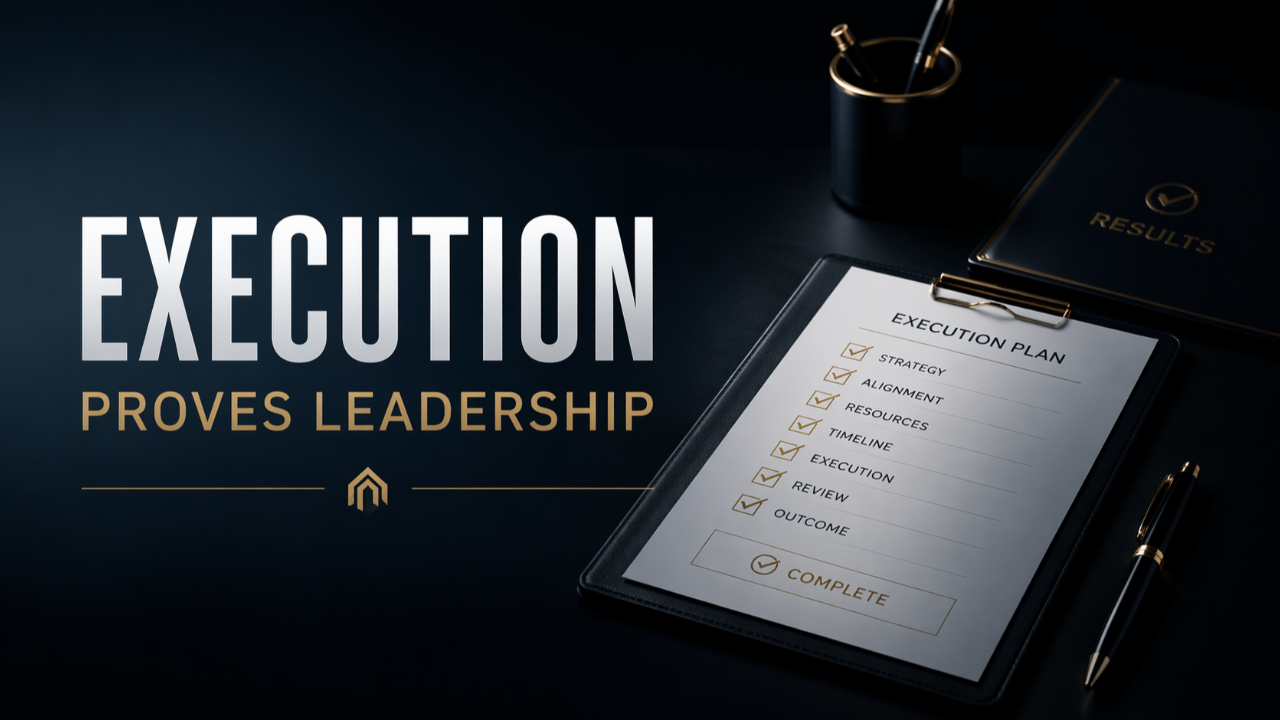
- Commit to execution. Not occasionally. Not only when you feel like it. But as a standard.
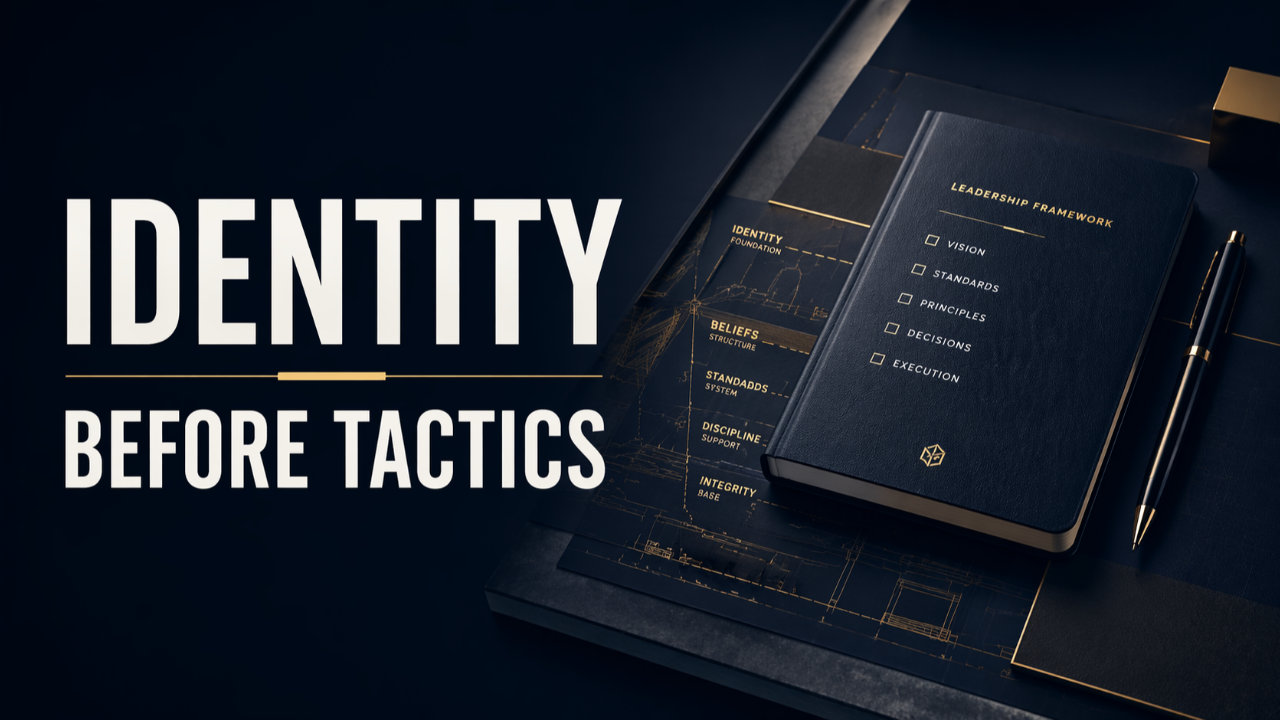
This is where most people fall off and miss their goals, because they never built the structure required to support sustained follow-through. And this is also why identity matters. If the person trying to execute is still misaligned internally, progress rarely holds for long. That is why before you build the life you want, you must become the person who can sustain it.
Here's The Real Shift
The goal isn’t to become more motivated. The goal is to become more structured.
Because when structure is in place:
- your decisions become easier
- your actions become more consistent
- your progress becomes more measurable
- your execution becomes more repeatable
And over time, your results become far more reliable.
That's the shift many people miss. They keep looking for better advice, stronger motivation, or more pressure. But what they actually need is a more structured operating system.
A Better Way Forward
If you’ve been relying on scattered advice, random strategies, or inconsistent effort, that’s not necessarily a reflection of your ability. It’s often a reflection of your structure. Leaders, entrepreneurs, and founders who create lasting change don’t rely on motivation alone. They install systems. The strongest systems aren't built around hype. They are built around clarity, structure, and execution in the right order.
Start With a System
If you want to stop approaching personal development as a collection of disconnected ideas, start with a system. The 9-Step Life Transformation System™ was built to help leaders and entrepreneurs clarify direction, build structure, and execute consistently enough for progress to become measurable and real. Leaders who want to move from inconsistent effort to structured execution often begin there.
Continue Reading
To go deeper, continue with these related articles: