Why Some People Move Forward Faster Than Others (And What Actually Determines Your Pace in Life and Leadershi)
Nov 03, 2026You’ve probably seen it before. Two capable people start with similar goals. Both are intelligent. Both are ambitious. Both say they want something different. And six months later, one has made meaningful progress while the other is still thinking, planning, restarting, or wondering where the time went.
That raises an uncomfortable question:
Why do some people seem to move forward faster than others?
The easy explanations are predictable, so others say and assume:
- “They just got lucky.”
- “They just knew the right people.”
- “They’re just more talented.”
- “They just had more money.”
People often use words like luck or chance to describe advantages, timing, circumstances, or outcomes they cannot readily explain.
You shouldn't treat or accept luck and chance as causal or acceptable explanations for success. You should look deeper. The truth is multi-layered. Look at the conditions, preparation, decisions, relationships, resources, structure, timing, and actions that helped produce the outcome. Because those factors can absolutely affect how quickly someone moves.
But they still don't explain everything. Especially when two capable people have access to similar opportunities.
Very often, one of the biggest differences is much simpler:
They operate differently.
Here's What’s Actually Happening
Some people turn their thoughts into decisions and their decisions into actions with relatively little friction. Others remain caught between uncertainty, overthinking, inconsistent action, repeated restarting, and weak follow-through. That difference matters. Because progress isn't just determined by what you want. It's influenced by how effectively you can convert what you want into sustained action and activity over time.
That's why execution capacity is important.
So, What Is Execution Capacity?
Execution capacity is your practical ability to convert clarity and decisions into consistent, sustained action over time, and to continue adjusting as needed based on evidence. In short, it's taking the PCACIAs.
It includes your ability to:
- Think clearly enough to know what matters,
- Make sound decisions without unnecessary delay,
- Organize the conditions that support your actions,
- Follow through consistently,
- Sustain effort over time,
- Learn from evidence, and
- Continue improving.
It's not simply more intensity. It's not moving fast for a week. And it's not being busy 24/7/365. It's your capacity to repeatedly turn your intentions into meaningful execution and follow-through. It's also why execution is such a revealing measure of leadership and self-leadership.
Eventually, what you believe, decide, and intend has to show up in what you actually do. That's what we call execution capacity.
And that capacity can be developed.
However, Faster Is Not Always Better
Before we go any further, one distinction matters. The goal is not speed for the sake of speed...
You can move quickly in the wrong direction. You can make fast decisions with poor judgment. And you can execute aggressively against a bad plan. But that's not progress. The goal is moving at the pace in the right direction. Clarity without movement creates stagnation.
Movement without clarity creates waste.
What we're looking for is: Clear direction + sound judgment + structured execution. That creates sustainable progress.
Here's Why Some People Move Forward Faster
- They Think More Clearly. People who make consistent progress tend to reduce unnecessary confusion. They know what they want, what matters now, what can wait, and what comes next. That doesn't mean they have every answer. It means they have enough clarity to move. This is one reason clarity matters so much. When every decision requires you to rediscover what you want, your progress and forward movement come to a halt. When your direction is clear, more of your energy can go toward execution.
- They Shorten Unnecessary Decision Cycles. Some people lose enormous amounts of time waiting for certainty. They revisit the same decision, revisit it again, ask three more people, research some more, and then they start over. Strong decision-makers still think carefully. But once they have enough information to make a responsible decision, they decide and move. That shortens the gap between: Information → Judgment → Action. And over time, those saved decisions compound.
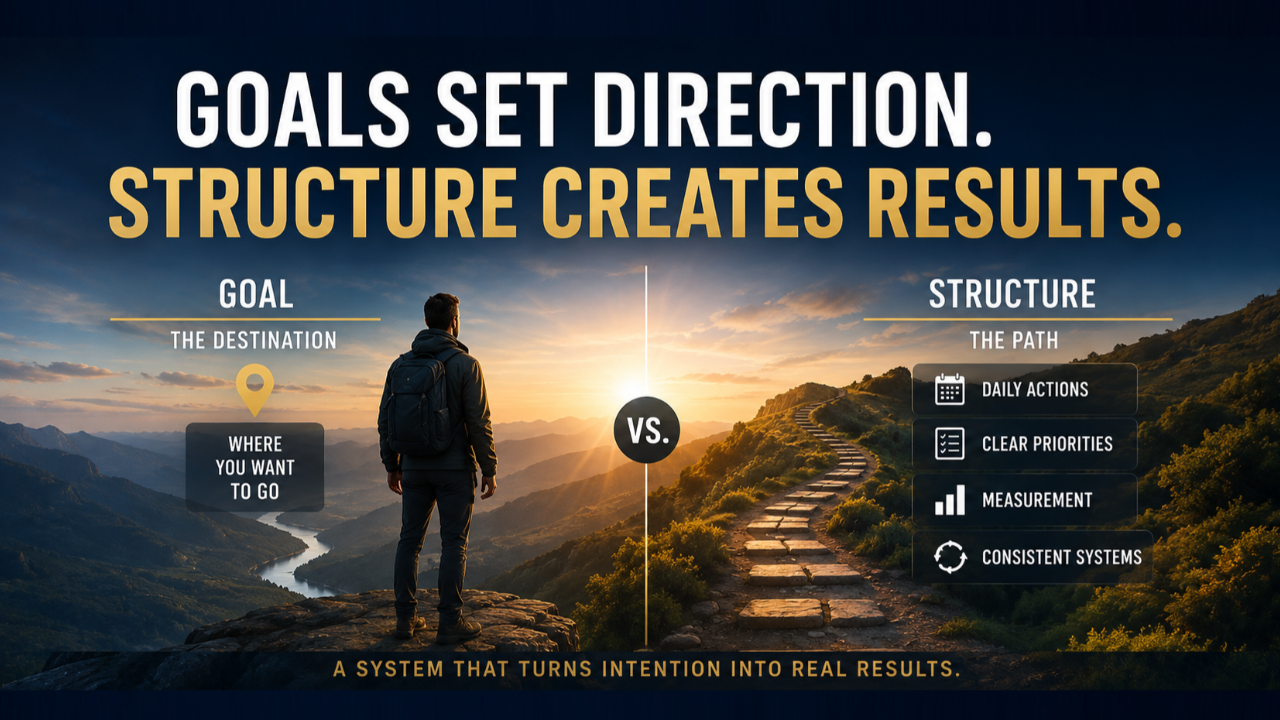
- They Build Structure Around What Matters. A goal tells you where you want to go. But your structure determines whether your days, resources, standards, and systems support movement in that direction. People who make consistent progress usually don't rely on remembering what matters every morning. They intentionally build supportive systems around what matters and execute. Their supportive systems may include: scheduled work periods, financial structure, defined priorities, automation, deadlines, accountability, routines, and measurable actions. Their progress is not completely dependent on mood and emotion. Their environment and operating structure help support their execution.
- They Operate With Higher Standards. Standards reduce negotiation. If your standard is: “I follow through on what I commit to,” then your execution becomes less dependent on how you feel that day. If your standard is: “I do what I can when I feel like it,” then inconsistency becomes your new normal. That's why your standards matter so intensely. They help convert your intentions into expected behavior. And that's also why The Hidden Cost of Living Without Standards matters. Weak standards create invisible drag. Strong standards reduce it.
- They Build Measured Consistency. People who move forward sustainably are rarely operating at maximum intensity every day. They establish a cadence and a rhythm. They repeat useful actions. They review what happened. They refine. They continue. And they repeat. That's much closer to the Powerhouse idea of taking the PCACIAs: Persistent, Consistent, and Continuously Improving Actions. They don't simply move. They learn while moving. That's also why understanding the difference between learning and implementation matters.
Knowledge becomes useful when it's used to change and improve your habits of decision, behavior, and execution. Your learning improves future execution.
But Here's Why the Others Stay Stuck
People who struggle to move forward often experience one or more operational bottlenecks. They may:
- Remain unclear,
- Overthink their decisions,
- Delay their actions,
- Operate without a supportive structure,
- Rely too heavily on motivation,
- Fail to measure their evidence,
- Reset repeatedly, and
- Maintain standards too weak to support consistent follow-through and execution.
That doesn't necessarily mean they lack ability. It may mean their current operating system is not supporting what they say they want. And that's an important distinction. Because if the problem is operational, it can be examined. And if it can be examined, it can often be strengthened.
However, There's A Cost to Moving Too Slowly
Slow progress does more than delay your outcome. Over time, it creates secondary problems like missed opportunities, lost momentum, frustration, reduced confidence, lowered standards, and doubt. Eventually, a capable person may begin saying: “Maybe this just isn’t for me.” But sometimes the problem isn't the goal. Sometimes the person has not yet developed the capacity required to carry the outcome they say they want. This is why before you build the life you want, you must become the person who can sustain it. That is a very different diagnosis.
Here's The Real Difference
The difference isn't always potential. Very often, it is operational alignment. One person may be operating like this: Clear → Decisive → Structured → Consistent → Learning. Another may be operating like this: Unclear → Reactive → Inconsistent → Restarting. Over a week, the difference may seem small. Over a year, it compounds. And that is why pace matters.
Here's What This Means for the Potential Founders & Self-Employed Entrepreneurs
Suppose two people both say: “I want to build something of my own.” One spends the next year thinking about it. The other begins clarifying what to build, talking to potential customers, improving necessary skills, organizing his finances, testing his offers, developing new relationships, measuring evidence, and adjusting fire as necessary. At the end of that year, the second person may appear to have “moved faster.” But the deeper truth is: They created more cycles of useful execution and learning. They did not simply move faster. They learned faster. And because they learned faster, they gained better evidence for the next decision.
That's execution capacity at work.
Here's What Actually Works
- Improve Your Clarity. Know what you want, know what matters now, and know what comes next.
- Shorten Unnecessary Decision Cycles. Don't wait for perfect certainty when responsible action is possible.
- Build Supportive Structures. Organize your time, resources, standards, and systems around the direction you have chosen.
- Raise Your Operating Standards. Expect follow-through from yourself and others.
- Execute Consistently. Take the PCACIAs.
- Study the Evidence. Let the reality of your results tell you what's working, what's not working, and what needs to change.
- Adjust Fire and Continue. Progress is iterative.
Here's The Reframe
Stop asking: “Why am I behind?” Start asking: “Where is my progress slowing down?” Is it clarity? Is it decision-making? Structure Standards? Execution? Evidence? Adjustment? or What? That's a much more useful question. Because: Sustainable pace is often the product of operational alignment.
The Importance of The Standard
Progress is not completely random. And it is not created by urgency alone. It is built through clear thinking, sound decisions, supportive structure, disciplined execution, evidence, and continual adjustment. Repeated over time. People who appear to move faster often are not merely acting faster. They're completing more useful cycles of decision, execution, evidence, learning, and adjustment, faster. And over time, those cycles compound.
Here's Your Next Step
If you want to increase your pace of progress, don't begin by simply demanding more speed from yourself. Begin by examining how you're operating. Ask:
- Where am I clear?
- Where am I hesitant?
- Where am I inconsistent?
- Where is my structure weak?
- Where are my standards too low? and,
- Where am I failing to learn from evidence?
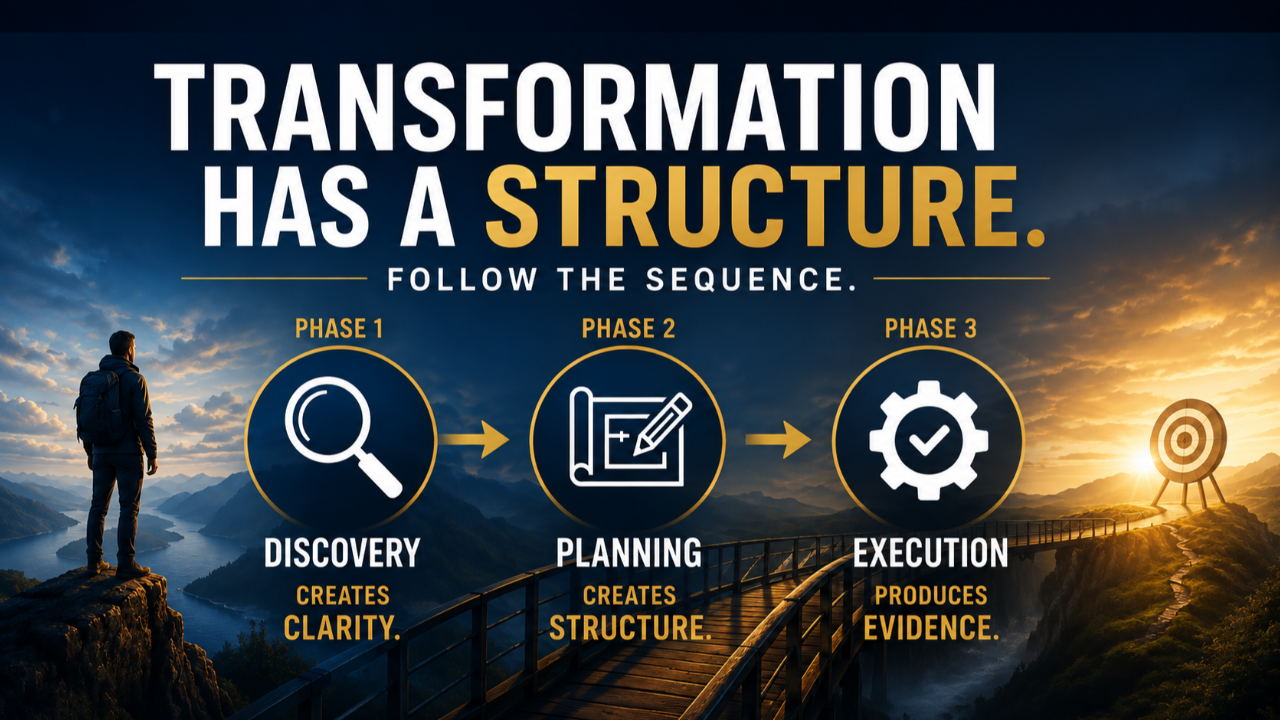
The 9-Step Life Transformation System™ is designed to help you move through Discovery, Planning, and Execution with greater clarity and structure, so your progress becomes more deliberate, measurable, and repeatable. #MakeItGreatOnPurpose