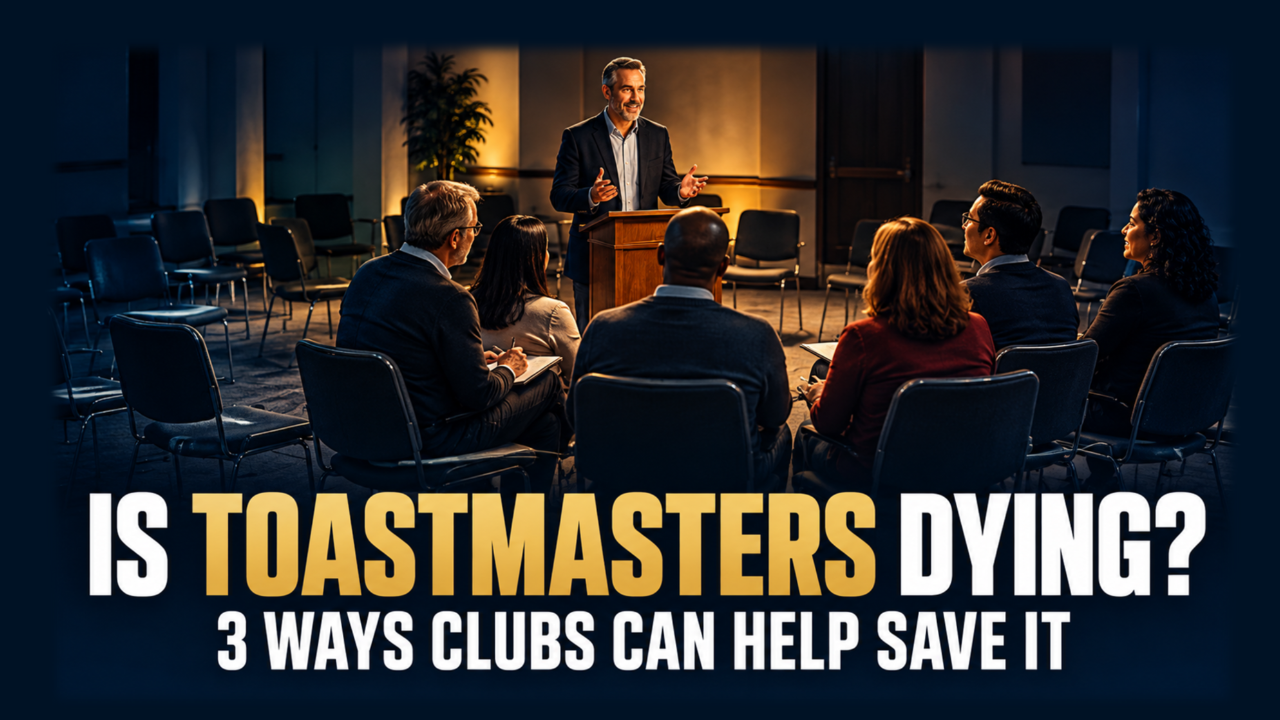
Is Toastmasters Dying? 3 Ways Clubs Can Help Save It
Sep 29, 2026Toastmasters is dying.
Yes, I said it.
And if you're a longtime Toastmaster, club officer, District leader, or former member, that statement may bother you. It should.
I have been a Toastmaster since 2014. I've served in club and District leadership, led three clubs to Distinguished status, coached speakers, taught communication, and spent more than a decade watching people walk into Toastmasters clubs hoping to become better speakers, leaders, and communicators. I love this organization.
That's precisely why I believe we need to have this conversation.
Toastmasters has experienced a substantial decline from the membership levels it reported several years ago. In 2020, the organization publicly described its membership as exceeding 364,000 across more than 16,200 clubs. Its 2024–2025 membership statistics reported more than 265,000 members and more than 13,800 clubs. Using those reported membership figures, that's roughly 27% below the 2020 level.
There are encouraging signs in more recent organizational reports. Toastmasters reported 280,881 total memberships as of September 30, 2025, a 2.1% year-over-year increase. But that doesn't eliminate the larger question: What happened—and what can those of us who care about Toastmasters do about it?
My answer starts at the club level.
Before We Add More, We Should Remember What Created the Value
When an organization loses momentum, sometimes the first question shouldn't be: What else should we add?
It should be: What created the value people originally came here for?
This is fundamentally a question of organizational clarity. As I've written elsewhere, leaders often try to solve a clarity problem by changing strategy. But before changing the strategy, we first need to understand what we're actually trying to build—and why. To answer that question for Toastmasters, we have to go back to Ralph C. Smedley.
The enduring Toastmasters organization traces its beginning to October 22, 1924, when Smedley and approximately two dozen men met in the basement of the YMCA in Santa Ana, California. Toastmasters describes Smedley's concept as deliberately simple: people developing confidence as speakers and leaders through practice in a supportive group environment rather than a formal academic setting. The concept was remarkably simple.
People needed opportunities to speak. They needed practice. They needed feedback. They needed opportunities to preside and lead. And they needed the sociability, fellowship, and encouragement that came from doing those things together. But Smedley eventually realized that something much bigger was happening.
Toastmasters Was Never Just About Making Speeches
In December 1935, Ralph C. Smedley wrote an article for The Toastmaster titled “Our Fundamental Purpose.”
He began with a question that remains worth asking today: What exactly is the purpose of a Toastmasters club? Was it simply to teach people how to stand before an audience and speak?
Smedley's answer was no.
He wrote:
“My own interest in the Toastmasters Club would be very much less if learning to make a speech represented the ultimate value in it.”
For Smedley, becoming a better speaker was important, but it wasn't the ultimate objective.
Toastmasters provided an environment in which people could discover abilities, develop themselves, expand their thinking, increase their capacity to serve, and become more capable human beings. And interestingly, Smedley was already thinking about member retention. He specifically connected understanding Toastmasters' larger purpose with what he called the problem of “continuous membership.”
A person could join, learn how to give a decent speech, decide he had gotten what he came for, and leave. But Smedley believed the deeper development available through continued participation could take years—even a lifetime. In the same article, he contrasted the relatively short-term work of improving speeches with the much longer work of developing the individual. That matters. Because Toastmasters wasn't designed merely as a course you completed. It was a club you belonged to.
So What Changed?
A lot. And not all of it was bad. Toastmasters expanded around the world. Its educational program became more sophisticated. Technology changed. Society changed. The needs of members changed. Eventually, Toastmasters developed Pathways, its modern educational program.
Pathways began rolling out in 2017 after years of development and testing. For a period, established members could participate in either Pathways, the traditional education program, or both. Then came 2020. COVID disrupted organizations around the world, forcing Toastmasters clubs to adapt rapidly to online meetings. At almost exactly the same time, another major transition was completed.
On June 30, 2020, Toastmasters officially ended its traditional education program. Beginning July 1, Pathways became the organization's sole education program. That timing makes simplistic explanations for Toastmasters' subsequent decline difficult.
I don't believe we can responsibly say, “Pathways caused the decline.” Neither should we simply say, “COVID did it.”
The organization was simultaneously navigating an educational transformation, technological change, a worldwide pandemic, changes in how people gather, and changing expectations among members. But we do know something else.
Toastmasters itself acknowledges that members reported significant challenges using Base Camp and navigating Pathways paths and projects. After several years of attempting improvements with its original learning-management-system provider, Toastmasters changed providers and launched a new Base Camp in October 2024. Meanwhile, its 2024–2025 membership statistics reported a member retention rate of 52.6%, even as more than 89,300 new members joined during that program year. That should get our attention.
People are still discovering Toastmasters. People are still joining Toastmasters. The more important question may be: Are we creating an experience that makes enough of them want to remain Toastmasters?
I believe that's where the opportunity begins.
Solution #1: Rebuild the Club Experience
World Headquarters matters. District leadership matters. The educational program matters. But most members don't experience Toastmasters International...
They experience a club.
They experience the person who greets them when they walk through the door. They experience the Toastmaster of the Day. They experience Table Topics. They experience their first Ice Breaker.
They experience the evaluator who either encourages their development or makes them regret volunteering. They experience whether anyone notices when they haven't attended in three weeks. They experience whether meetings feel alive or administrative.
They experience whether they're becoming better. And they experience whether these people are becoming their people. So if we're serious about strengthening Toastmasters, that's where I believe we should begin.
Make the club worth belonging to.
Create community. Create camaraderie. Celebrate improvement. Mentor new speakers. Give people meaningful opportunities to participate. Build traditions. Have some fun. And above all, create an environment where people actually become better communicators.
Don't merely administer Toastmasters.
Build a great club.
Solution #2: Simplify the Educational Experience
Toastmasters needs structure.
I'm a coach. I build systems and frameworks for a living. I believe deeply in structured development. But structure is valuable only when it helps people move toward the intended objective.
When structure becomes unnecessarily difficult to navigate, it creates friction. And friction has a cost.
For years, members reported difficulties with portions of Pathways and Base Camp. Toastmasters itself has responded with redesigns and changes, ultimately replacing its learning-management-system provider and launching a new Base Camp in 2024. That's good.
Organizations should learn. Organizations should adjust. But I believe we should continue demanding an educational experience that is simple enough to understand, useful enough to value, and flexible enough to support the people actually using it.
At the club level, we don't have to wait for World Headquarters. Club officers and mentors can make the educational journey easier. Don't allow the complexity of the educational program to stand between a new member and the Toastmasters experience they came to receive.
During my most recent term as Club President, I found that one of the most effective things we could do was to get new members participating and speaking almost immediately—usually before they had spent any time navigating the online learning system.
Club Officers and Mentors must help the new member choose a path. Help them find their first project. Get them speaking quickly. And explain what they need to know when they need to know it.
Don't overwhelm a nervous aspiring speaker with the entire administrative architecture of Toastmasters during the first week. Let them experience the value first. Then help the structure support their growth.
The educational program should strengthen the club experience. The club experience should not exist merely to administer the educational program.
Solution #3: Get Back to the Basics
Getting back to the basics does not mean going backward. It means remembering what worked, understanding why it worked, and carrying those principles forward.
Smedley repeatedly emphasized that Toastmasters' value extended beyond simply learning to deliver a speech. His 1935 argument was that speech development could occur relatively quickly, while the deeper development of the individual was the work of years—even a lifetime. That's organizational stewardship.
Innovation matters. Technology matters. And educational development matters. But none of those should cause us to forget why people came in the first place.
People want to communicate. They want confidence. They want to express ideas effectively. They want constructive feedback. They want opportunities to practice.
Many want leadership experience. And human beings still want something technology hasn't eliminated: Community. Toastmasters can provide all of those things extraordinarily well.
Perhaps our future doesn't require reinventing Toastmasters. Perhaps part of the answer is remembering what made Toastmasters valuable in the first place.
Make It Your Club
So what can one Toastmaster do?
More than you might think. Get involved with a club. And don't simply attend it. Make it your club. Take some responsibility for the experience. Welcome the guest. Encourage the nervous speaker. Give the thoughtful evaluation. Mentor the new member.
Help simplify the educational process. Create an environment where people know they're expected, appreciated, challenged, and improving. And if you're an officer, don't allow the administration of Toastmasters to become more important than the Toastmasters you're administering.
Protect the room. Protect the experience. Protect the opportunity for people to speak, evaluate, learn, serve, laugh, connect, and grow.
Nearly a century ago, Smedley argued that learning to make a speech wasn't the ultimate value of Toastmasters. I believe he was right.
Toastmasters at its best doesn't merely create better speeches. It develops people. And organizations that continue creating genuine value for people don't have to die. They can learn. They can adjust. They can remember. They can rebuild. And they can live forward.
Toastmasters has already survived for more than 100 years. Those of us who inherited it now have an opportunity to help prepare it for the next 100.
Let's get back to the basics—and get to work.
Join the Conversation
- Do you believe Toastmasters has lost its way?
- What does your club do exceptionally well?
- Why have members left your club—or why have they stayed?
- What should Toastmasters simplify, preserve, eliminate, or rediscover?
Share your thoughts below. I especially want to hear from current Toastmasters, former members, club officers, District leaders, and people who once considered joining but decided not to stay.
Watch: “Toastmasters Is Dying: 3 Solutions to Save It”
Continue Developing as a Speaker
Toastmasters gives people something extraordinarily valuable: opportunities to practice, receive feedback, and develop through experience.
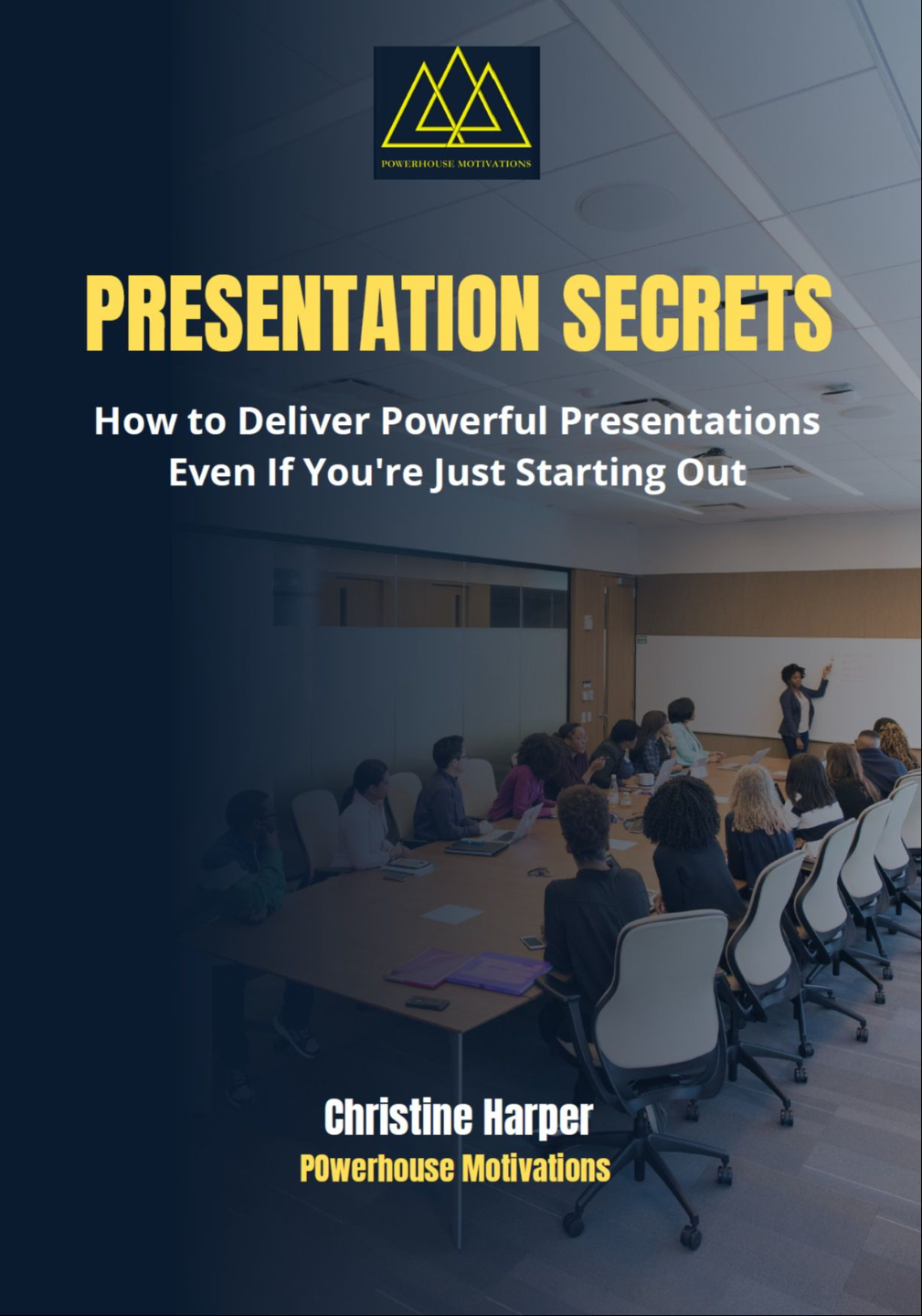
If you're looking to continue developing your presentation skills beyond the club environment, my book, 11 Steps to Powerful Presentations & Public Speaking, provides a practical framework for building, organizing, and delivering more effective presentations.
Sources and Further Reading
- Toastmasters International, “Our Fundamental Purpose,” Ralph C. Smedley, The Toastmaster, December 1935, Vol. 1, No. 12.
- Toastmasters International, Our History / Toastmasters Begins.
- Toastmasters International, “A Century of Toastmasters International,” October 2024.
- Toastmasters International, “Moving Forward by Honoring the Past,” June 2020.
- Toastmasters International, Education Programs FAQ / Base Camp Transition and Pathways Updates.
- Toastmasters International, 2024–2025 Fact Sheet.
- Toastmasters International, March 2026 CEO Report.