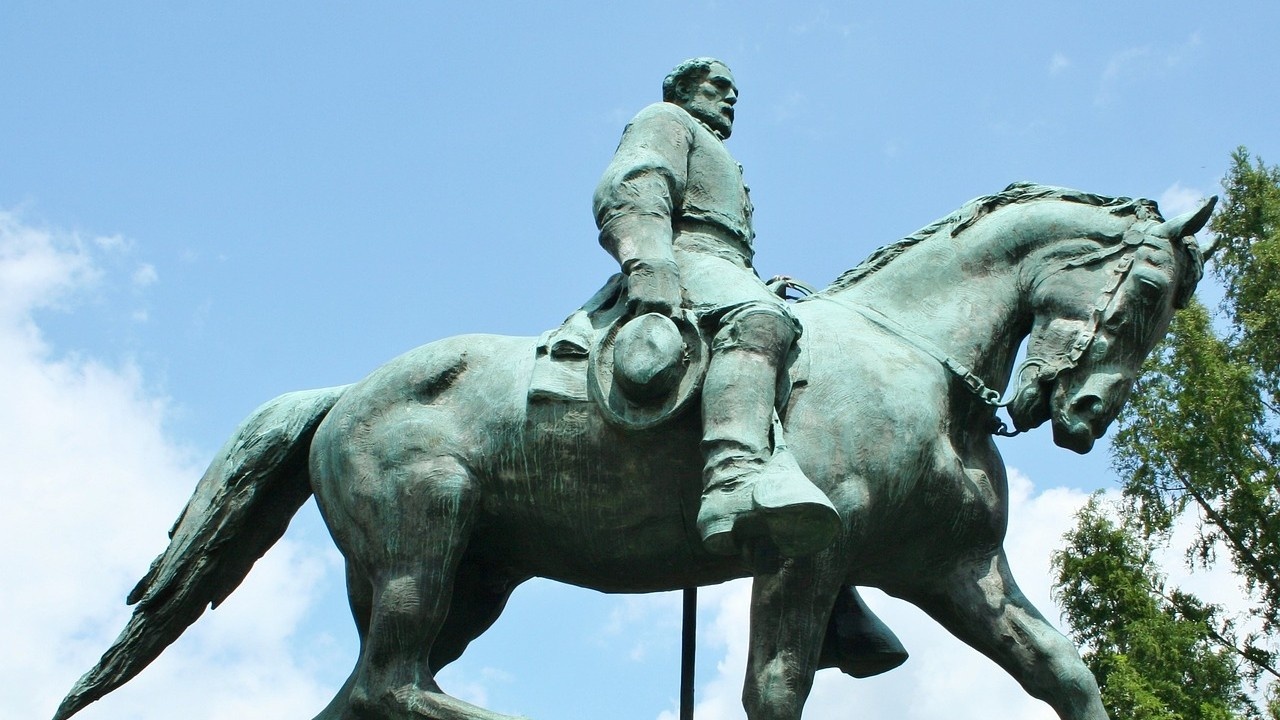
Why History Should Be Studied Honestly – Not Flattened Emotionally
Jun 27, 2020Public symbols, monuments, and historical memory often carry more complexity than modern arguments allow. Strong thinking requires context, maturity, and the ability to engage history without reducing it to slogans.
History is rarely simple.
It carries pain, conflict, courage, contradiction, and memory all at once. That is part of what makes it difficult to handle well in public life.
When people are angry, wounded, or reacting to the pressure of the present, they often want the past reduced into something easier to manage: heroes and villains, clean narratives, simple judgments, and visible symbols that can be either defended or destroyed.
But history does not become more truthful when it is made simpler.
It becomes easier to weaponize.
That is why honest engagement with history requires something more disciplined than reaction. It requires study.
A Personal Memory of Place and Meaning
Growing up in Richmond, Virginia, I experienced the city through more than one lens.
As a child riding the bus with my grandmother from Creighton Court into other parts of the city, I saw architecture, churches, neighborhoods, and public spaces that stirred something in me long before I had language for it. I was drawn to the beauty of old structures, the scale of historic homes, the texture of cobblestone streets, and the sense that places could carry memory across generations.
Those experiences did not make me unaware of history. They made me curious about it.
They shaped how I viewed public space, symbolism, and the idea that visible reminders of the past could affect the imagination of a young person in ways that were not always obvious or predictable.
Why Public Symbols Are Rarely Interpreted the Same Way
One of the realities of history is that public symbols do not mean the same thing to everyone.
A monument, memorial, church, battlefield, or historic street may be viewed by one person as a painful reminder of injustice, by another as a warning, and by someone else as a source of curiosity, inspiration, or civic memory.
This does not mean every interpretation is equally complete. It does mean that public meaning is often layered.
That complexity matters.
Because when complex symbols are treated as if they can carry only one meaning, the conversation often becomes intellectually weaker and emotionally more volatile.
Erasing Symbols Does Not Automatically Deepen Understanding
There are times when societies reconsider what they honor publicly. That is part of civic life.
But removing a symbol does not automatically produce historical maturity. In some cases, it can reduce visible engagement with the past without increasing actual understanding of it.
If people do not know who a figure was, what they represented, how they were used symbolically over time, and why they remain controversial, then the problem is not only the symbol. The problem is also the lack of serious historical formation.
You do not strengthen a society by making it less capable of remembering, interpreting, and discussing its past honestly.
History Must Be Studied in Full Context
Mature engagement with history requires context.
That means asking better questions:
- What actually happened?
- Who benefited, who suffered, and why?
- How was this figure or symbol used in its own time?
- How has its meaning changed over time?
- What does public memory reveal about the present?
Without context, history becomes propaganda material for whichever group is loudest in the moment.
With context, it becomes a source of deeper understanding.
Reaction Is Not the Same as Wisdom
Strong emotional response is understandable when history touches identity, pain, injustice, or memory. But emotional intensity alone is not the same as wisdom.
Wisdom requires restraint, study, and the ability to hold difficult truths without collapsing into simplification.
This is important because many modern debates are driven more by symbolic conflict than by thoughtful historical engagement. People are often fighting over what a symbol represents to them now without having done the work required to understand what it represented across time.
That gap creates distortion.
Personal Agency Still Matters in How We Read the Past
One of the most overlooked realities in these conversations is that people still retain agency in how they interpret what they encounter.
Not every visible reminder of a difficult past must produce paralysis. In some cases, confronting the past honestly can deepen resolve, strengthen gratitude, and sharpen a person’s commitment to live with more clarity and purpose in the present.
This does not erase pain. It does mean that pain is not the only possible outcome of remembrance.
Sometimes visible symbols of history provoke grief. Sometimes they provoke questions. Sometimes they provoke responsibility. Sometimes they provoke a determination to rise above what previous generations endured.
Interpretation matters.
Why Historical Maturity Matters Now
A society that cannot engage its history honestly will struggle to lead itself well in the present.
If the past is always reduced to political shorthand, then public understanding becomes shallow. And shallow understanding makes a population easier to divide, easier to inflame, and easier to manipulate.
Historical maturity helps prevent that.
It teaches people to slow down, investigate, evaluate competing narratives, and resist the temptation to confuse moral seriousness with emotional immediacy.
In that sense, how a society handles history says a great deal about how prepared it is to handle truth.
Final Thought
History should not be worshiped blindly. And it should not be flattened emotionally.
It should be studied honestly.
That requires enough maturity to face complexity, enough discipline to ask better questions, and enough steadiness to resist reducing the past into whatever is politically useful in the present moment.
The goal is not to protect every symbol. The goal is to protect truth.
Because when truth is handled carelessly, memory becomes manipulation.
And when history is studied honestly, people become harder to mislead.
Ready to Think More Clearly About Leadership, Identity, and History?
Start with the 9-Step Life Transformation System™, a framework designed to help leaders and entrepreneurs strengthen clarity, govern their thinking, and lead with greater maturity and intention.
Need Help Strengthening Discernment and Perspective?
If you want direct support clarifying your thinking, developing stronger judgment, and leading with greater intellectual steadiness, schedule a Strategic Session with Ernie Davis.
Thanks for reading The Freedom Link Blog by Powerhouse Motivations.